

In today’s world of technology and manufacturing, achieving mechanical precision in a small form factor is one of the most significant engineering challenges. As devices become more compact and multifunctional, the demand for intricate mechanical components that fit into tight spaces without sacrificing accuracy is skyrocketing. This article explores the importance, applications, and advancements in mechanical precision within small form factors.
The Importance of Mechanical Precision in Compact Designs
Mechanical precision refers to the exactness and accuracy of mechanical components in their operation and construction. When combined with a small form factor, it means creating highly accurate parts and assemblies within very limited physical dimensions. This precision is crucial in ensuring reliability, performance, and longevity, especially in industries such as aerospace, medical devices, robotics, and consumer electronics.
Compact devices must often operate in challenging environments, where even minute mechanical errors can lead to failure or degraded performance. Therefore, mastering mechanical precision in a small form factor is not just a design preference but a necessity for product success.
Challenges in Achieving Mechanical Precision in a Small Form Factor
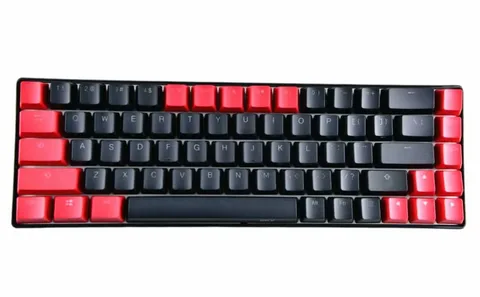
Designing with small mechanical keyboard precision in a small form factor presents unique challenges:
- Space Constraints: Limited space restricts the size and complexity of components.
- Manufacturing Tolerances: Tight tolerances require advanced manufacturing techniques.
- Material Selection: Choosing materials that provide strength, durability, and minimal weight.
- Thermal Management: Managing heat in small enclosures without compromising precision.
- Assembly Complexity: Ensuring components fit perfectly without interference or excessive wear.
Overcoming these challenges often requires innovative engineering solutions, such as micro-machining, additive manufacturing (3D printing), and precision CNC machining.
Applications of Mechanical Precision in Small Form Factors
Several industries benefit greatly from this technological achievement:
Medical Devices
Miniaturized surgical instruments, implantable devices, and diagnostic tools rely on mechanical precision in a small form factor to perform delicate operations with minimal invasiveness.
Consumer Electronics
Smartphones, wearable devices, and compact cameras demand precise mechanical assemblies that maximize functionality within sleek designs.
Aerospace and Defense
In aerospace, where weight and space are premium, precision components must fit into small volumes while maintaining reliability under extreme conditions.
Robotics
Micro-robots and precision actuators utilize compact mechanical designs to deliver high performance in confined spaces.
Innovations Driving Mechanical Precision in Small Form Factors
Technological advances are pushing the boundaries of what is possible:
- Micro-electro-mechanical Systems (MEMS): Integrating mechanical elements at a micro scale.
- Advanced Materials: Using composites and alloys that allow for smaller, stronger parts.
- Computer-Aided Design (CAD) and Simulation: Enabling engineers to model and test precision parts before production.
- Automation in Manufacturing: Robotics and AI-controlled machining processes improve repeatability and accuracy.
Conclusion
Achieving mechanical precision in a small form factor is a cornerstone of modern engineering, enabling the development of innovative, compact, and highly efficient devices. As technology evolves, the synergy between precision engineering and miniaturization will continue to transform industries, leading to smarter, faster, and more reliable products that fit seamlessly into our lives.
